domingo, 29 de enero de 2017

PLASTIC: POLYPROPYLENE (PP)


Name: Polypropylene.    Resultado de imagen de polypropylene
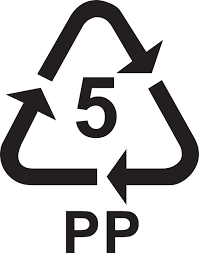
Polypropylene (PP) is a thermoplastic polymer which is sometimes referred to as polypropene. Its resistance to acids, bases, and a plethora of chemical solvents makes it an ideal candidate for use in a large range of applications. It is also extremely durable. The most common Polypropylene manufacturing methods include extrusion and injection molding. These techniques can convert PP into a wide range of useful products used for commercial and industrial purposes.
One of the most versatile aspects of manufacturing with PP is the ability to mix additives in during the manufacturing process which give the material specific and special properties. For example, certain types of additives can be introduced that give Polypropylene dust and dirt resistant properties or make paint and ink easier to adhere to the material.


Polypropylene is occasionally recycled. PP is strong and can usually withstand higher temperatures. It's used to make lunch boxes, margarine containers, yogurt pots, syrup bottles, prescription bottles. Plastic bottle caps are often made from PP.
 
Polypropylene is:
A excellent chemical resistance, a high melting point, hard, but flexible, waxy surface, translucent and strong.

Uses:
Most bottles tops, ketchup and syrup bottles, yogurt and some margarine containers, potato crips bags, biscuit wrappers, crates, plants pots, drinking straws, hinged lunch boxes, refrigerated containers, fabric/ carpet fibres heavy duty bags/tarpaulins.


jueves, 26 de enero de 2017

METAL: GOLD


Name: gold
Symbol: Au
Atomic number: 79
Relative atomic mass (Ar): 196.966569 (4)
Standard state: solid at 298 K
Colour: gold
Classification: Metallic
Group in periodic table: 11
Group name: Coinage metal
Period in periodic table: 6
Block in periodic table: d-block
Electron shell structure: 2.8.18.32.18.1
CAS Registry ID: 7440-57-5

What are the Physical Properties of Gold?
Color
Bright Yellow.
Luster
It has a shine or glow.
Ductility
It can be beaten into extremely thin sheets of gold leaf.
Malleability
Capable of being shaped or bent.
Conductivity
Good electrical conductor.
Solubility
Solubility (ability to be dissolved).
Hardness
A relatively soft metal, gold is usually hardened by alloying with copper, silver, or other metals.
Density
It is a dense metal.
Melting point
It melts at 1065°C.
 
What are the Chemical Properties of Gold?
Chemical Formula
Au.
Activity
Gold is chemically inactive, it's extremely resistant to chemical action.
Compounds
Ready reducibility from compounds to metal.
Auric chloride and chloro-auric acid are its most common compounds.
Reactivity with acids
Aqua regia, a mixture of nitric and hydrochloric acids, has the ability to dissolve gold.
Isotopes
It has one stable isotope, 197Au.
Reactivity with Non-metals
Gold does not react with the Non-metals, except for halogens, with which it forms halides.
Alloys
Silver and platinum.
Gold is one of the few elements you can find just lying on the ground. This one-ounce nugget of pure gold was found in Alaska in 1890 by Hogamorth Marion, while on a trip to sell shoes to Eskimos. Seriously.
Gold is metallic, with a yellow colour when in a mass, but when finely divided it may be black, ruby, or purple. It is the most malleable and ductile metal; 1 ounce (28 g) of gold can be beaten out to 300 square feet. It is a soft metal and is usually alloyed to give it more strength. It is a good conductor of heat and electricity, and is unaffected by air and most reagents.
Gold is usually alloyed in jewellery to give it more strength, and the term carat describes the amount of gold present (24 carats is pure gold). It is estimated that all the gold in the world, so far refined, could be placed in a single cube 60 ft. on a side.
The most common gold compounds are auric chloride (AuCl3) and chlorauric acid (HAuCl4). A mixture of one part nitric acid with three of hydrochloric acid is called aqua regia (because it dissolved gold, the King of Metals). It is unaffected by air and most reagents.
 
Nuggets of native gold
 
DISCOVERY OF GOLD
Gold was discovered by known since ancient times in unknown at not known. Origin of name: from the Anglo-Saxon word "gold" (the origin of the symbol Au is the Latin word "aurum" meaning "gold").
Gold has always fascinated people and gold is certainly one of the very first metals known. Nobody knows who picked up a gold nugget first but it would have been because it was shiny. Gold was highly valued from the earliest recorded times in history. It seems that the Egyptians developed gold smelting some 5600 years ago (about 3600 BC) using clay blowpipes to heat the smelter contents. Egyption inscriptions dating back to 2600 BC describe gold. Gold workers from Mesopotamia (known now as Iraq) made one of the earliest known pieces of gold jewellery in about 2600 BC. Gold is mentioned several times in the Old Testament. Tutankhamun's funeral mask is one of the most iconic gold pieces known. It was made around 1223 BC and is a stunning piece of ancient gold craftsmanship.
Ancient Egyptians had been working with gold for at least 1700 years before this mask was made.
 
The famous mask of Tutankhamun, made over 3300 years ago in 1323 BC.
.
 
APPLICATIONS
Gold is used as buillon and in jewellery, glass and electronics. Jewellery consumes around 75% of all gold produced. Gold for jewellery can be given a range of hues depending on the metal with which is alloyed (white, red, blue, green etc.). Colloidal gold is added to glass to colour it red or purple, and metallic gold is applied as a thin film on the windows of large building to reflect the heat of the Sun's ray. Gold electroplating is used to in the electronic industry to protect their copper components and improve their solderability.
Gold is used to cure rheumatoid arthritis, under a treatment called Chrysoteraphy. It is prescribed when treatment with non-steroid antu-infiammatory drugs is failing to give relief.
Dentists have used gold for filling cavities (before mercury amalgam became available), for crowns, and for other purposes since ancient times. Gold is malleable, nearly immune to corrosion, and hard enough to form a biting surface that can be used for years.
In certain regions of the world, especially in Eastern Europe, the former Soviet countries, Central Asia, and the Caucasus, gold teeth are worn as a status symbol, a symbol of wealth.


Interesting Facts about Gold
  • A single ounce of gold can be pounded into a sheet 300 feet wide by 300 feet long. That's bigger than a football field! That same ounce can form a wire nearly 100 kilometers long.
  • South Africa used to be the largest supplier of the world's gold, but today China and Australia produce the most gold.
  • Gold flakes were sometimes sprinkled on the food of the wealthy during the Middle Ages.
  • Many people traveled to California during the Gold Rush in the late 1840s when gold was discovered at Sutter's Mill.
  • Gold can be pounded thin enough to allow light to shine through.
  • If all the gold ever discovered by man was melted down it would form a cube with sides of about 25 meters each.
 
*  *  *